Friday, April 9, 2010
"YikeBike" Might Electrify Your Commute
This is a cool article about some of the cool "future" bikes that could be coming to a bike lane near you. This is an e-bike, but the design is interesting and unique and could be a window to the future of road cycling and commuting. Check out the videos at the bottom to see how this bike works.
Thursday, April 8, 2010
Cool Bike
I have been in Alabama all week for work, and tonight we ate at a catfish restaurant that had antiques/collectibles decorating their dining room. The coolest thing was this old Schwinn tandem bike that they had on a divider wall, between booths. It wasn't in the best shape, but with a little work it could be beautifully restored.
Tuesday, April 6, 2010
Top 50 Cycling Cities In America
Well Bicycling.com released its Top 50 Cycling Cities In America, and Orlando is nowhere to be seen. I was pleased to see that Gainesville made the list, and even the cities of Louisville and Lexington Kentucky, the state that I grew up in before moving to Florida.
One of my coworkers/riding friends asked me, "What do we need to do to get Orlando on this list?" My only response was to say "Do some of the things that the winning cities are apparently doing."
The article sums it up nicely as well. "There are many important things a city can do to gain our consideration for this list: segregated bike lanes, municipal bike racks and bike boulevards, to name a few. If you have those things in your town, cyclists probably have the ear of the local government, another key factor. To make our Top 50, a city must also support a vibrant and diverse bike culture, and it must have smart, savvy bike shops."
Maybe the best thing to take away from this for our city, or any other, is dissecting this explanation to determine where we fall short. The big red flag for Orlando is that we don't have many/any of the elaborate facilities, and since we don't, maybe we need to "get the ear of our local government".
Biking and Walking, "What Americans Want"
Check out this Q and A that The New York Times did with Transportation Secretary Ray LaHood. He proclaimed that bicycling and walking should be given the same consideration as motorized transport in state and local transit projects.
My favorite response is to the first question;
"Americans want alternatives. People are always going to drive cars. We’re always going to have highways. We’ve made a huge investment in our interstate highway system. We’ll always continue to make sure that those investments in the highways are maintained.
But, what Americans want is to get out of their cars, and get out of congestion, and have opportunities for more transit, more light rail, more buses, and some communities are going to street cars. But many communities want the opportunity on the weekends and during the week to have the chance to bike to work, to bike to the store, to spend time with their family on a bike.
So, this is not just Ray LaHood’s agenda, this is the American agenda that the American people want for alternatives to the automobile.
What’s happened around America is people are buying bikes and they’re using them for recreational purposes on the weekend and there’s no better family way for people to spend a weekend than riding their bikes on these biking trails.
This is what Americans want and we’re accommodating their needs to really find places to recreate. And what could be healthier than taking a 30-minute walk, which is recommended by every doctor in America, or hopping on your bike and riding four, five or six miles and enjoying the great outdoors?
Look, this is a win-win. This is a way for people to get out of their cars, a way for people to recreate, a way for people to get good exercise, and it’s what Americans want to do."
Check out the entire interview here.
Sunday, April 4, 2010
The Good, The Bad, and The Ugly
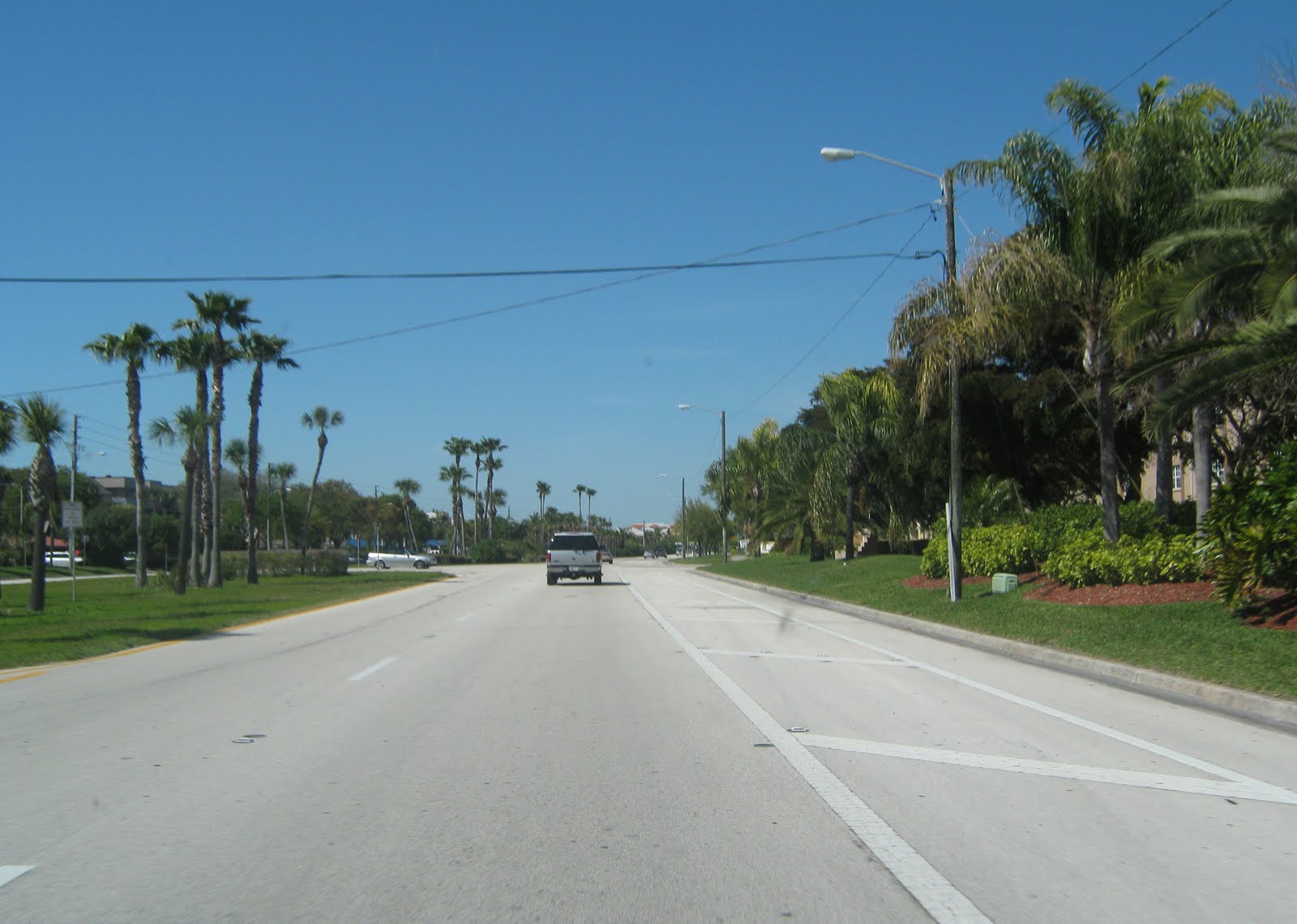
I spent this past weekend at St. Pete Beach and Ft. DeSoto Park. It was a beautiful place to visit and bike.

The Ft. DeSoto area not only had bike lanes along the roadway, but also had a wide trail that accommodated both cyclists and runners/walkers. The island had a bike rental area that provided bikes of all types and sizes.
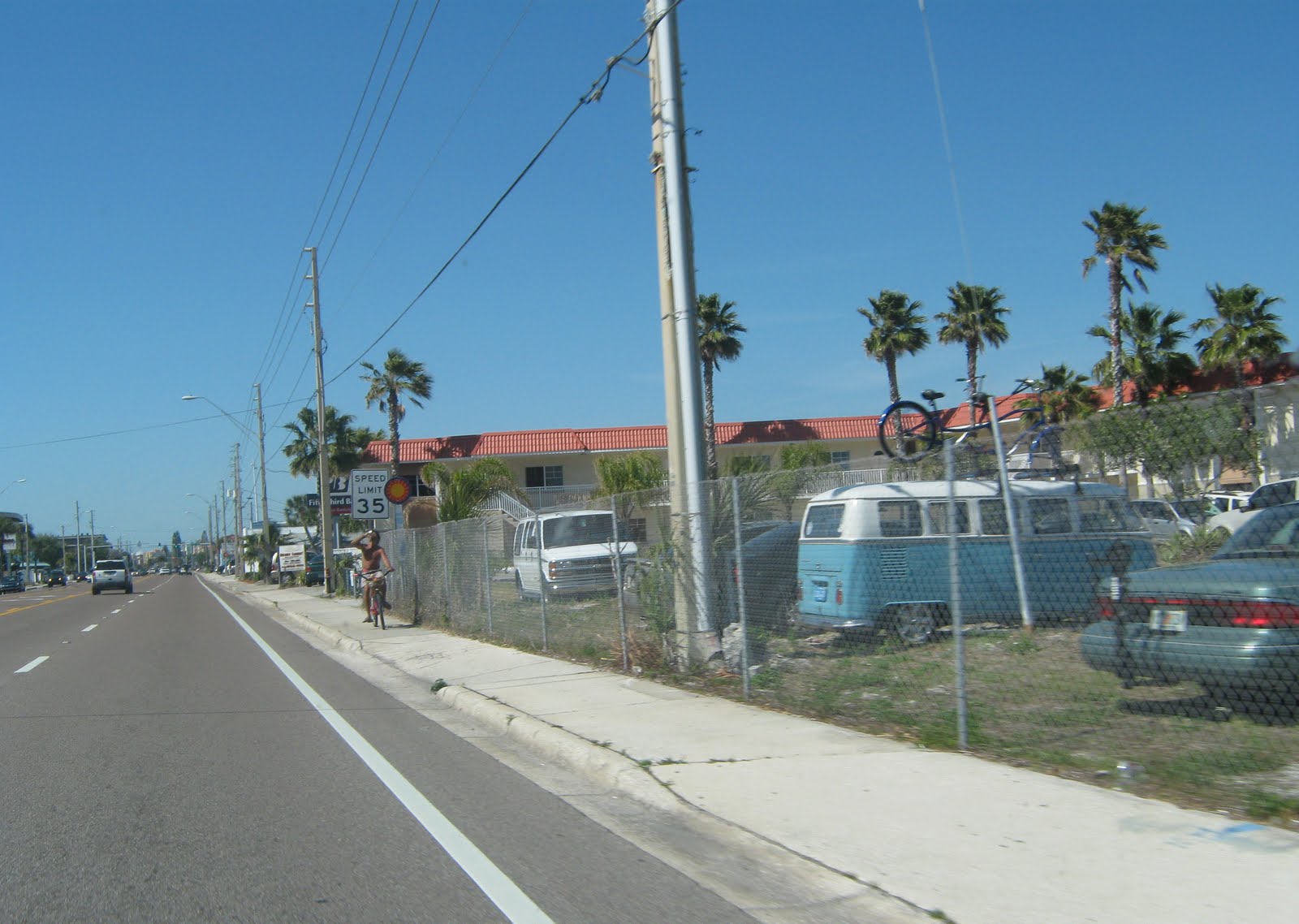
The St. Pete area was your typical beach tourist area. It also had bike lanes, but they were <3' in width, and felt pretty dangerous with cars constantly making turns in and out of driveways. They also had several bike rental shops, but this just seemed to add to the safety issues on the road.
The tourists that rented bikes were not used to riding, much less riding on the road around cars. The majority of the riders that I saw just rode on the sidewalk. Some of the riders that did venture into the narrow bike lane, didn't know the rules of the road. I got to witness all of the typical novice rider mistakes; riding against the flow of traffic, on and off the sidewalk and the roadway, talking on the phone while riding, etc. The only riders that I saw wearing helmets were spandex clad riders out for group rides.


The area needs additional trails or wider bike lanes, to give people a comfortable ride on the road and off sidewalks. It would also help if rental companies could do a little more to teach road safety and riding techniques, before giving novice riders a bike and sending them out to fight the bumper to bumper tourist traffic.
If the tourist towns could get more people on bikes to make their short trips out for dinner or sunscreen, the bumper to bumper traffic could potentially become a more manageable flow.

The Ft. DeSoto area not only had bike lanes along the roadway, but also had a wide trail that accommodated both cyclists and runners/walkers. The island had a bike rental area that provided bikes of all types and sizes.
The St. Pete area was your typical beach tourist area. It also had bike lanes, but they were <3' in width, and felt pretty dangerous with cars constantly making turns in and out of driveways. They also had several bike rental shops, but this just seemed to add to the safety issues on the road.The tourists that rented bikes were not used to riding, much less riding on the road around cars. The majority of the riders that I saw just rode on the sidewalk. Some of the riders that did venture into the narrow bike lane, didn't know the rules of the road. I got to witness all of the typical novice rider mistakes; riding against the flow of traffic, on and off the sidewalk and the roadway, talking on the phone while riding, etc. The only riders that I saw wearing helmets were spandex clad riders out for group rides.


The area needs additional trails or wider bike lanes, to give people a comfortable ride on the road and off sidewalks. It would also help if rental companies could do a little more to teach road safety and riding techniques, before giving novice riders a bike and sending them out to fight the bumper to bumper tourist traffic.
If the tourist towns could get more people on bikes to make their short trips out for dinner or sunscreen, the bumper to bumper traffic could potentially become a more manageable flow.
Friday, April 2, 2010
Thursday, April 1, 2010
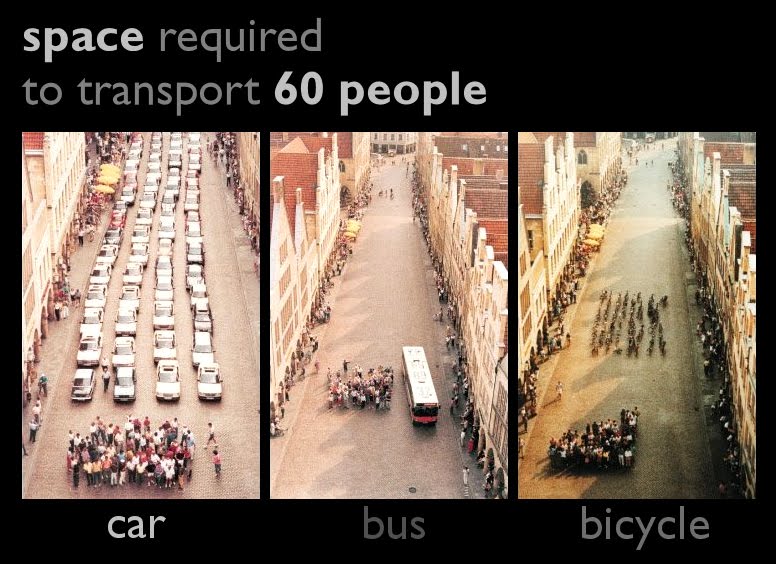
More Bikes=Less Cars
Going from DC to Orlando, a few things were blatantly obvious. Both cities have major automobile traffic problems with major congestion, but one invests in bicycle facility improvements and the other doesn't.
I was sent this image by a fellow rider, and it sums up how cycling is one of the solutions to automobile congestion. The more people on bikes, means fewer people in cars. Our nation's capital is fighting the problem by increasing the miles of bike lanes, separated trails/cycle tracks, bike racks, lockers, etc.
With more voices raising up for increased investment in bike facilities, I think Orlando can become like several of America's great cities, that are embracing cycling and investing in ways to increase ridership. Cities are starting to realize that they cannot sit back and just hope that people want to get on a bike and fight off traffic, but by creating safe routes for all types of users, they can get more people in the saddle and on the road!
Subscribe to:
Posts (Atom)