Thursday, May 12, 2011

Study Finds That Men Are Riding More-Let's Work on Everyone Else

Guys On Bikes photo

I think anyone in a major metropolitan area can attest that there is a bicycling renaissance in North America. A new study found that it's not an equal opportunity cycling revolution, nor is it evenly spread. Worst of all, is what the data shows in terms of gender equality in the cycling stream (or lack thereof).
"Almost all the growth in cycling in the United States has been among men between 25 and 64 years old, while cycling rates have remained steady among women and fallen sharply for children." - Ralph Buehler and John Pucher, "Bicycling Renaissance in North America? An Update and Re-Appraisal of Cycling Trends and Policies"
Skirt Girl On Bike photo

Buehler and Pucher set out to to expand and update a study they did nine years ago (scroll all the way down for 1999 paper) pointing out the trends in North American cycling.


What they found in looking back at the last decade is that bicycling has continued to increase, with the total number of bike trips tripling between 1977 and 2009, and cycling's share of total trip rising from 0.6% of trips to 1.0% of trips. (National Personal Transportation Surveys and National Household Travel Surveys data).
As far as where cyclists are clustered, looking at American Community Survey (Census) figures shows a big difference in cycling in Alabama, Tennessee, and West Virginia, where 0.1% of commuters go by bike, and Oregon and the District of Columbia, where 1.9% of commutes are by bicycle. In both Canada and the U.S., the authors note, cycling is higher in the western areas, and on the coasts. Bike-to-work commutersare especially sparse in the southeastern U.S.


Of special note is the fact that (dispelling the myth that cycling is a fair-weather activity) the highest levels of commuter bikers is in Canada are in the Yukon (2.6%) and the Northwest Territories (2.1%).
Buehler and Pucher studied the data for gender trends, and what they found was a male-dominated picture. Men have always been the majority in both commuter and sport cycling, and those trends are actually accelerating. Men aged 25 - 64 made up the bulk of the growth spurt of cycling. From 2001 to 2009, in fact, the percentage of all bike trips made by women in the U.S. dropped from 33% to 24%. What's behind the drop? Pucher speculates only that perceptions of safety may have much to do with it, as women seem more sensitive to ideas of personal safety than men.
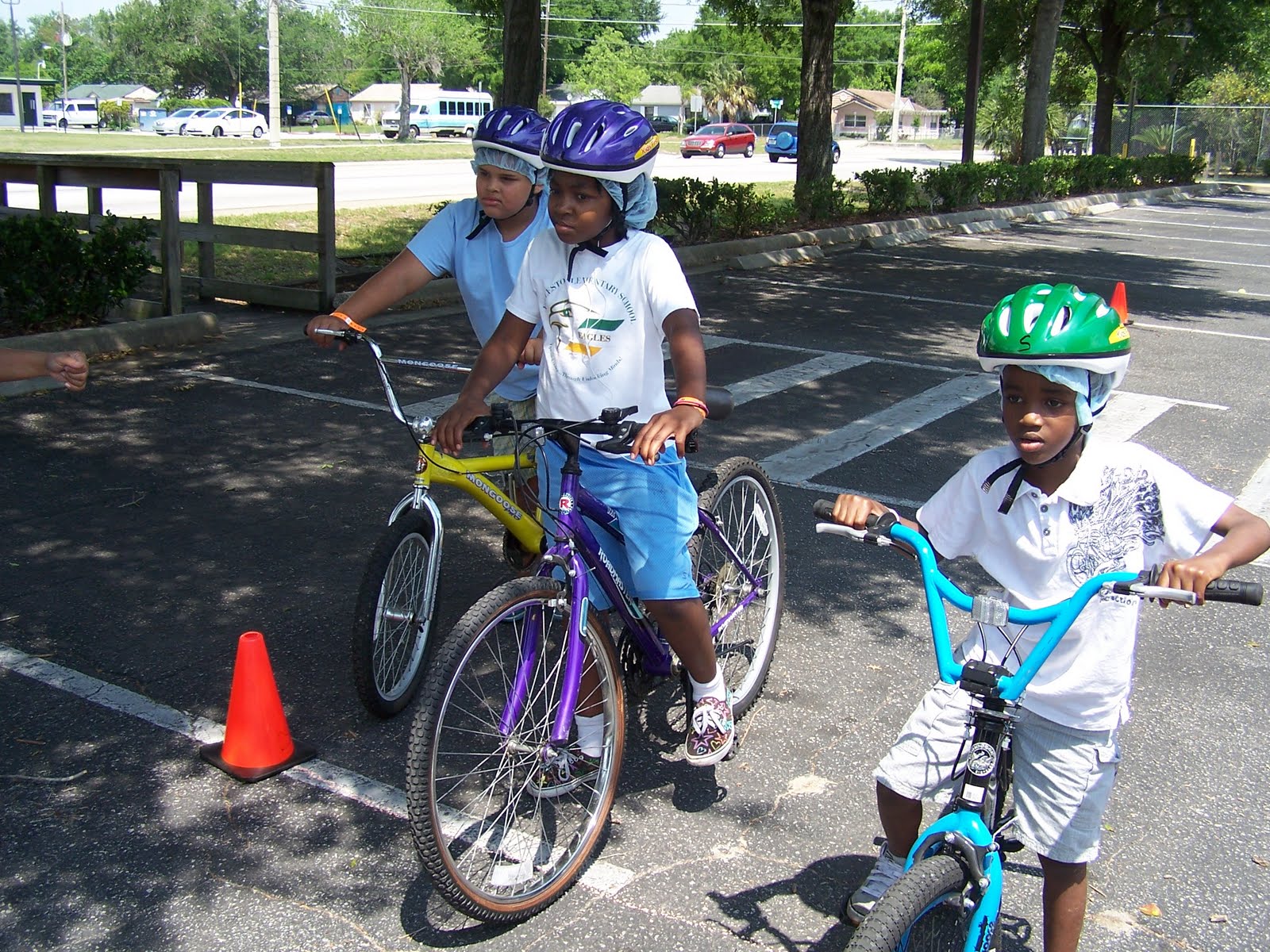
Kids On Bikes photo

In addition, a very pertinent piece of data from the study, in light of U.S. obesity rates, is the drop in younger cyclists. The share of all bikes trips made by persons younger than 16 fell from 52% in 2001 to 39% in 2009.
While women and younger people aren't getting on their bikes at the same rates as adult men, they should be. For the good news from Buehler and Pucher's analysis of the data is that cycling safety continues to improve both in the U.S. and in Canada.


Fatalities per 10 million bike trips fell by a massive 65% in the U.S. between 1977 and 2009, from 5.1 to 1.8 fatalities per 10 million trips. In Canada, fatalities per 10,000 riders dropped from 4 in 1996 to 3 in 2006.
What do Buehler and Pucher conclude about the "bike renaissance" in North America? It is growing, and has become more widespread since the pair's 1999 research. The boom is limited to "a few dozen" cities, and these, the authors say, are islands (of primarily male cyclists) in a sea of car dominance.

Tuesday, May 10, 2011

Complete Streets: It’s About More Than Just Bike Lanes


Complete Streets and Clarence Eckerson, Jr. have produced another great video that demonstrates that making improvements for bikes and pedestrians, improves the safety and comfort for everyone. It also shows how New York has taken control of some of their streets and have shifted the priority away from the car and share the streets for all users.

Over the last four years, New York City has seen a transportation renaissance on its streets by not only striking a more equitable balance in providing more street space for pedestrians, bicyclists and buses, but also creating much-needed places to just linger and gaze around in a safe spot, sit down, or meet friends amid the sometimes-chaotic pace of the city.

The video above looks at three of New York City's most recent re-designs: Columbus Avenue, 1st & 2nd Avenues, and Prospect Park West (in Brooklyn) and show you how almost everyone (even drivers!) benefit from the safer, slower streets. They interview transportation engineers (with nearly 100 years of combined experience), elected leaders, community board members, pedestrians, cyclists and business owners to get their take on the newly configured roads.

The truth is: no matter how hard the news media tries to convince you otherwise, these new projects have tremendous community support and the benefits go beyond just cycling. The physically-separated bike lanes bring with them traffic-calming improvements; shortened crossings for pedestrians, a more predictable street for drivers, the chance for more greenery and - in the case of the East Side - dedicated bus-only lanes with camera enforcement.

One of our longest Streetfilms at 11 minutes, I urge you to sit back and take this all in no matter what side of the issue you think you are on. You're likely to be enlightened.

Sunday, May 8, 2011

NACTO Urban Bikeways Design Guide Released for Download!

nacto urban bikeway guide photo
The National Association of City Transportation Officials has released its Urban Bikeways Design Guide (you can download it in PDF format). This reference guide should be on the bookshelf of all urban planners, and even if they don't follow its suggestions exactly, they should at least know about them. Cities shouldn't constantly have to reinvent the wheel, and bikeway best practices should spread all over the world from the places that "get it" (like Copenhagen).
nacto urban bikeway guide photo

Infrastructure is crucial if cycling is to become more popular in the US. Many cities have shown that if you build it, they will come...
NACTO encourages the exchange of transportation ideas, insights, and practices among large central cities while fostering a cooperative approach to key national transportation issues.
  • Sharing data and best practices, through research projects and peer-to-peer sessions
  • Communicating regularly, through conference calls with the Cities and via an annual meeting with the USDOT Secretary and other federal agencies
  • Advocating change in transportation laws, regulations, and financing to enable large cities to better provide the integrated transportation services envisioned by Federal transportation law.
The web version of the guide will be updated to reflect the latest changes.

Orlando's Bike to Work Day

 
Friday was Orlando Mayor Buddy Dyer's Bike to Work Day and he had only one rule for the 200 cyclists who joined him Friday morning for National Bike to Work Day.

"No one pass the mayor," Dyer joked.

Cyclists riding mountain bikes, 10-speeds and beach cruisers pedaled alongside the mayor for the eighth annual event, which promotes the use of bicycles as an alternative way to get to work.

May is National Bike Month, and hundreds of communities across the U.S. are having events focusing on bicycles and two-wheeled transportation. Dyer wanted to emphasize how easy it is to ride a bike in Orlando. Dyer, who sported a pair of black shorts, black shades and a white bike helmet, added that riding bikes is both healthy and friendly to the environment.

The 15-minute, police-escorted ride, which many bikers called "steady," began at Infusion Tea in College Park and weaved its way through the streets of Orlando. The group rode south on Edgewater Drive, east on Lakeview Drive and then south on Orange Avenue toward City Hall.

Along the way, the bikers were greeted by honking horns and waving pedestrians. And none of the bikers tried to get ahead of Dyer.

Dyer has hosted a Bike to Work Day event every year since becoming mayor in 2003. The League of American Bicyclists has designated Orlando as a "Bicycle Friendly Community" each year since 2000.

Thursday, May 5, 2011

Think Bike Returns to Miami

Earlier this week, several members of the Dutch delegation came to Miami for a two-day ThinkBike workshop. The purpose of the ThinkBike workshop was to learn from the expertise of Dutch planners.  They came to teach us how we could improve downtown Miami’s bikeability. Unfortunately, I was unable to attend the actual workshop, but I was able to get the full download of their thoughts from a co-worker that attended. The feedback I recieved was extremely positive.

Those that participated in the seminar were invited to ride a bicycle through the streets of Miami on Monday afternoon, although not everyone chose to ride. Those that opted not to get on a bicycle included several FDOT officials; I sincerely wished they had taken the opportunity to ride the streets of Miami. Nonetheless I consider it a huge success that four FDOT District 6 officials attended this seminar.  This is a big step in the right direction and a huge success in and of itself.

On Tuesday attendees were divided into groups. Each of the groups was invited to design a bicycle lane on a designated street within the city with the help of Dutch planners.

The Orange Team came up with a bike lane design that will actually be implemented on North Miami Avenue.  Although the plans haven’t been finalized, North Miami Avenue-from NW 14th Street to NW 36th Street-will likely see bike lanes as wide as 6 feet in some sections, with a 2-3 foot soft buffer and perhaps travel lanes as narrow as 10 feet. The County Public Works Department quickly came up with money and support for this project after the plans were presented.

The Blue Team was assigned the task to design a bicycle lane for 14th Street, from North Miami Avenue to the Health District. One of the ideas the Dutch presented for a section of this project was to separate the cycle track from the cars using parallel parking. This is a successful technique already used in New York City, San Francisco and Portland.

It should be noted that some attendees were at first skeptical that bike lanes could be implemented as initially proposed by the Dutch.  By the end of the seminar even some of the skeptics had a change of heart. It was very informative for the FDOT.  Hopefully the Dutch were able to change the FDOT mindset a bit, to “Think Bike” rather than only cars.

Thanks to the initiative of the Dutch Consulate we have been bestowed with a cool concept bike lane in the heart of the city. This is a major North-South bike connection; this is awesome, but a bit concerning at the same time.  Why does it take a Dutch delegation to fly across the Atlantic Ocean to get a bike lane installed in Miami?  Not to sound bitter, but Transit Miami’s recommendations are very similar to what the Dutch have proposed. Unfortunately, progress has been very slow.  Miami should be ecstatic to potentially be getting a world-class bike lane. Perhaps the Dutch brought the spark that will light up Miami with properly designed bike lanes? I hope so, because it is desperately needed in South Florida and the rest of the state too.

Everyone should be grateful for what the Dutch have done for the cycling world; including everything they accomplished in Miami during their short stay here. It sounds like the City of Miami and the County Public Work Department are willing to consider innovative bicycle infrastructure in future projects.  Let’s just hope their can-do attitude doesn’t fizzle in a couple of weeks. Let’s also hope that the FDOT begins to consider some of the ideas the Dutch have presented. The world is changing in front of our eyes. Gas prices are rising and people are driving less. We can’t continue to design roads to move cars faster; bicycles need to be part of the transportation mix.

The Dutch have set the bar for cycling infrastructure.  We should aspire to make cycling as safe as they have. We have plenty to learn from their 40+ years of experience in designing bicycle infrastructure. As the Dutch say “Think Bike”. Hopefully the County Public Works Department, the City of Miami, and the FDOT will pursue innovative projects like the Dutch have already proved to be successful.

Monday, May 2, 2011

Got Bikes...Ride 'Em? 2011


It seems like this spring has been crazy busy, but May is now upon us and May is National Bike Month.  few weekends ago, I was asked to help out in this year's installment of the Got Bikes?...Ride 'em! program. Our team met at the Dr. James R. Smith Center, with Commissioner Samuel B. Ings, during the Kid's Health Fair & Field Day. There were a few hundred kids there to participate in multiple events and learn about proper exercise and diet. The day included an Easter Egg Hunt, live music, food, "bouncy houses", and our obstacle course and bike training rodeo and bike raffle.

We set up an obstacle course and that let the children take turns making bike signals at stops and intersections, weaving through cones, looking back at signals, and finally riding while avoiding obstacles. After they had completed the course, they were given a raffle ticket for one of the ten bikes and helmets we gave away.

As usual, the children had fun winning the bikes, but today was also cool to see them ride bikes and learn about proper riding techniques. It makes it all worth while when you can see kids retain things that you are telling them, and that a few kids get a brand new bike to ride home. It was also cool to see a few of the kids that won last year, stroll in on the bikes. They had kept their bikes with pride and were happy to come by and ride through the obstacle course too. It is always good to share bike handling skills and to give kids bikes of their own.

NYC Biking and Safety Still Increasing

Biking continues to go up in New York as driving and transit ridership stays nearly flat, according to a report being released today by the New York City Department of Transportation. The report found that bicycle commuting into Manhattan increased by 13 percent in 2010. During that same period, subway and bus ridership dropped by a little bit over 2 percent, while car traffic rose slightly.
The report, the department’s third annual Sustainable Streets Index, showed other biking trends pointed upward. Commuting by bike in New York City is up 262% in the past ten years, and bicyclists now make up a third of the evening rush hour traffic along major bike routes in Brooklyn and Manhattan. On top of that, more than half a million adult New Yorkers ride bicycles at least several times a month.

The report comes after several other reports, including reports out of NYU and Rutgers, say cycling is only a small percentage of commuters. But the NYC DOT says that is based on older data gathered by the US census, and that census data is an inexact measure of bike commuting because it only measures “primary” methods of commutes.  The DOT says its methods are more accurate because they measure actual bicycle riders, consistent with national traffic management measures.

Department of Transportation commissioner Janette Sadik-Khan said a big part of that growth came from cyclists using bike lanes. “I think if you build it they will come,” she said about lanes. “They’ll come if you build a safe, effective network that connects neighborhoods where people want to bike.”

Critics say bike lanes take up too much road space and make it harder for cars to navigate the city. But the report says in addition to bike lanes, expect the installation of traffic-calming features like pedestrian malls, street-narrowing, and removing through-lanes for turning bays. Sadik-Kahn said all of those changes have reduced deaths and injuries from crashes.

Other findings:
Traffic speeds in Midtown Manhattan improved by six percent between the fall of 2008 and the fall of 2009, and then leveled off in 2010.

Ridership on crosstown buses dropped 5 percent–except on 34th Street, which has dedicated lanes and countdown clocks.

After the city began a pilot program that allowed businesses to take late-hour and early morning deliveries, delivery companies saw vehicle travel times improve 130% compared to evening and midday travel speeds. Sadik-Khan said the program will be made permanent and expanded.

New parking meters in Park Slope that raise prices during times of high demand reduced parking duration by 20 percent, enabling more drivers to find metered spaces and reducing overall traffic volumes on the neighborhood’s main commercial avenues.
Transportation for America Coalition